Here are the comments from my monthly Town Hall Meeting. The one last night was in the Cedar Brook Community Centre:
Good evening, everyone, and thank you for joining us tonight. It’s always a pleasure to meet with residents, hear your questions, and share what’s happening both at City Hall and right here in our community.
I also want to welcome our guests this evening: • Louise O’Neill from the Friends of Cedarbrook & Thomson Memorial Parks • Our Neighbourhood Community Officers from 43 Division Thank you for your partnership and the work you do every day.
Community Updates We have a number of local updates to share:
New BIA Our newest Business Improvement Area — the Cedarbrae Markham Lawrence BIA — is now officially underway, and I’m looking forward to seeing this great team strengthen the local business community. Speed Hump Feedback: Eastpark Boulevard We’ve heard concerns about possible traffic diversion once speed humps are installed on Crusader Street. If you live on Eastpark Boulevard, I’m asking for your feedback on whether speed humps should also be considered for your street. Please email my office — your input will guide next steps.
Road Work Coming Up Starting Spring 2026 through Spring 2027, Banmoor Boulevard, Hillock Place, and Landfair Crescent will see road resurfacing. Sewer rehabilitation is also planned for Alpaca Drive, Eastpark Boulevard, and Landfair Crescent.
New FIFA Standard Soccer Pitch – Scarborough Village Park Standard Soccer Pitch – Scarborough Village Park standard mini pitch at Scarborough Village Park. • Scarborough–Guildwood is getting a new FIFA minipitch at Scarborough Village Park. • It will include artificial turf, enclosed fencing, seating, and accessible entrances, with construction finishing this spring and an opening event planned for early June. • This is a major win for our community and part of Toronto’s preparations as a World Cup host city. Community Safety & Winter Response • Community safety remains a priority. • Over the past weeks, we’ve expanded 311 support, accelerated snow removal on residential streets, and continued to advocate strongly for additional shelter and warming spaces. • The City recently opened 50 new shelter spaces to support residents during the coldest period of the year. • You’ll also hear from our 43 Division officers tonight, who continue to support safety initiatives across the area. Budget 2026 – Thank You • Thank you to everyone who took part in the Budget 2026 consultations. • Your feedback directly shapes decisions on transit, recreation, emergency services, libraries, and local programs. • Council will finalize the budget in the coming days, and your input has been invaluable.
Transit, Transportation & Local Roads • Strengthening transit continues to be a major focus. • Council recently adopted my motion urging Metrolinx to reinstate the Lakeshore–Midtown rapid transit line, and I’m continuing to advocate for Toronto’s inclusion in planning for High-Speed Rail. • Locally, speed hump installations are progressing, road resurfacing and hydro upgrades continue, and the new traffic lights at Guildwood Parkway and Rowatson are on track to be activated this spring. • Slow Down signs are also available from my office—just give us a call. Parks, Recreation & Community Facilities • Early Local Registration is expanding in our ward. o This program is very important to me. Several residents approached me, asking that they have early access to programming close to their residents. I drove this initiative with a request to City Council to implement this program. o Centennial and Scarborough Village Recreation Centres were the first to be added, and now Cedarbrook Community Centre will join the list for CampTO 2026.
• Grant Faulkner Park o I worked with the City and family of Grant Faulker, who is very supportive of this initiative, to have the park named in honour of him, a Toronto resident who tragically died in 2015 while experiencing homelessness. o The name not only commemorates his life but also serves as a reminder of the importance of protecting vulnerable individuals and addressing homelessness in the community. o Construction begins this summer on a new park named in honour of Grant Faulkner. The park will include a playground, soccer fields, a cricket cage, accessible seating, and shaded areas.
Planning, Development & Housing • Last fall, Council approved new zoning changes for major streets like Lawrence, Eglinton, Markham Road, and Bellamy Road North—allowing more small local services that bring vibrancy to our main roads. • At the same time, I strongly opposed extending these changes to quiet residential streets, and I’m pleased to share that those “Neighbourhood Interiors” amendments did not move forward. Over 90% of residents opposed them, and I heard you clearly. • I’ve also called for a proper review of Toronto’s outdated “major streets” map and continue to press the Province for more local control over pot shops and alcohol serving establishments to better protect neighbourhoods. serving establishments to better protect neighbourhoods. ________________________________________ CityWide Information Wide Information A few quick reminders: • Interim property tax instalments are due March 2, April 1, and May 1 • Relief programs are available for eligible seniors and residents with disabilities • Vacant Home Tax declarations are due April 30 • Tree Maintenance Review survey is open until February 28 • Toronto hosts its first FIFA World Cup match on June 12 ________________________________________
Regional Work • In recent months, I’ve represented Scarborough–Guildwood as Deputy Mayor and TRCA Chair, hosting the Great Lakes & St. Lawrence Cities Initiative Forum, and at the ROMA Conference as Chair of the Federation of Ontario Public Libraries. • These discussions directly support our work on climate resilience, water systems, and community programs. I look forward to your questions and hearing what matters most to you and your families.
Thank you again for being here.
Welcome Louise O’Neill to share her presentation on Friends of Cedarbrook and Thomson Memorial Parks Group Welcome NCO’s to speak on community safety and answer any questions residents may have.
Closing (after guests and Q & A) Scarborough–Guildwood continues to grow, evolve, and strengthen — and it’s your involvement that drives this progress. Thank you for your continued participation, your advocacy, and your support. Tonight is about continuing the conversation. Please visit the table for information that you can take home. Thank you again for being here.
Good afternoon, everyone. It is truly a pleasure to be here.
I’ve often been called a champion for Open Data at the City, and honestly, it’s a title I wear with pride.
My involvement started well before the program officially launched in 2009.
Back then, the idea of making our data sets available to the public was a radical concept for some, but I saw the potential for a more transparent, efficient, and innovative Toronto.
Since those early days, I’ve made it a priority to keep up that momentum.
Whether it’s pushing for Ward-level survey data or my recent motion to enhance public reporting on service performance and standards, I am always looking for ways to get more City data into your hands.
The goal remains the same: the data belongs to the people.
Toronto should be immensely proud of what we’ve built.
We aren’t just participants in this space; we are unquestioned leaders.
In fact, I happen to know that not one, but two other governments nominated our Toronto team for the Canadian Open Data Awards this year.
They cited our work as a direct inspiration for their own transparency efforts.
When other jurisdictions look to Toronto as the gold standard for empowering their citizens, you know we’re doing something right.
Speaking at last year’s inaugural awards was a personal highlight for me.
The energy in that room was electric. Meeting the users, hearing about your niche projects, and having the chance to congratulate the dedicated public servants who work behind the scenes was incredibly moving.
Being back this year is even more special.
The fact that we have enough high-impact, world-class work to host a full awards show every single year is evidence of open data’s lasting impact in Toronto.
While open data certainly fosters transparency in government, it’s that impact that matters most.
While Open Data is valuable, we have to remember Its true potential is in by how it is used. It matters when it leads to new tools, better services, and tangible, positive impacts.
We see it in projects such as the Transit Headway Management Platform, which uses TTC data to fix bus bunching and get Toronto moving!
We see it in youth-led apps that help students improve their own neighborhoods, or in tools that help our city’s most vulnerable residents access the services they deserve.
That is where the ‘magic’ of the data happens.
To the staff who do the hard work of making City data available: thank you. Your commitment to transparency and public engagement is second to none.
And to our winners and everyone across the city who has made use of open data: thank you for your curiosity and your brilliance. Your efforts make Toronto a better city—one spreadsheet at a time.
City of Toronto Media Relations has issued the following: ==========================================
News Release
February 10, 2026
Snowstorm declarations ending, drivers still reminded not to park where temporary orange “Snow Removal” signs are posted
The Major Snowstorm Condition and Significant Weather Event declarations, which came into effect on Sunday, January 25, will end today at 5 p.m.
The declarations helped to expedite plowing and snow removal after Toronto received approximately 90 cm of snow in two snowstorms in January, which opened up access for emergency and transit vehicles and improved accessibility of residential streets, sidewalks, bike lanes and school bus loading zones.
From January 16 to this morning, crews have hauled almost 300,000 tonnes of snow to designated snow storage sites as part of ongoing snow removal operations. Of this, nearly 240,000 tonnes were hauled away since these declarations came into effect.
Targeted snow removal will continue across the city with a focus on narrow streets, sidewalks and bike lanes. Drivers are reminded not to park where temporary orange “No Parking – Snow Removal” signs are posted in snowbanks as snow removal will take place on these streets within 24 to 48 hours. Vehicles left parked in these locations may be ticketed $100 or towed at the owner’s expense as they can interfere with snow removal operations.
Drivers should consider off-street parking whenever possible to help crews remove snow more quickly and effectively.
Residents can continue to report areas that need extra attention to 311.
Toronto is home to more than three million people whose diversity and experiences make this great city Canada’s leading economic engine and one of the world’s most diverse and livable cities. As an Official Host City for the FIFA World Cup 2026™ and the fourth largest city in North America, Toronto is a global leader in technology, finance, film, music, culture, innovation and climate action and consistently places at the top of international rankings due to investments championed by its government, residents and businesses. For more information, visit www.toronto.ca or follow us on X at www.x.com/cityoftoronto, on Instagram at www.instagram.com/cityoft or on Facebook at www.facebook.com/cityofto.
– 30 –
Media contact: Media Relations, media@toronto.ca
================================================================ You are receiving this email because you are subscribed to receive Toronto News Releases updates.
All City of Toronto news releases are also available on the City’s website at www.toronto.ca/home/media-room/news-releases-media-advisories/ .
Do not reply to this email. If you believe that you have received this announcement in error, visit www.toronto.ca/home/social-media/e-updates/unsubscribe/ to be removed from the subscription list.
Here is a summary of the municipal budget presented to Toronto City Council by Mayor Chow today:
City of Toronto’s 2026 Budget now final — focuses on affordability, service stability and financial sustainability
Today, Toronto City Council considered the 2026 rate- and tax-supported operating and capital budgets proposed by Mayor Olivia Chow. The 2026 Budget prioritizes affordability for residents, strengthens community safety, keeps the city moving, and maintains reliable frontline services while continuing the City’s multi-year approach to long-term financial sustainability. The budget includes a combined residential property tax increase and City Building Fund levy increase of 2.2 per cent.
Mayor Chow has issued a Mayoral Decision indicating she will not exercise her veto and has shortened the 10-day period for the Mayor to veto any amendments. As a result, the 2026 Budget is now deemed adopted. A Mayoral Decision outlining this has been issued and is available on the City’s Mayoral Decision webpage: www.toronto.ca/city-government/council/council-committee-meetings/mayoral-decisions.
The 2026 Budget is comprised of an $18.9 billion operating budget ($16.61 billion tax supported; $2.25 billion rate supported) and an historic $63.1 billion 10-year capital budget and plan (2026–2035), the largest 10-year capital plan in the City’s history.
The operating budget includes $788 million in efficiencies, reductions and offsets to address financial pressures.
To help inform the 2026 Budget, input was received from more than 25,000 residents through consultations held in October, as well as telephone town halls, speakers to Budget Committee and written submissions in January.
Key investments in the 2026 Budget
Making life more affordable: – Freezes TTC fares for a third consecutive year and expands service – Introduces monthly fare capping after 47 paid trips, starting in September, providing 2.1 million free rides – Provides more weekday hours at Toronto Public Library branches, opening all 100 library branches seven days a week, year-round, starting this summer – Continues the Rent Bank, helping 2,800 households stay housed – Expands the Student Nutrition Program, providing nutritious food to approximately 330,000 students per day in 841 schools – Supports food programming at City-run camps, providing nutritious snacks to approximately 115,000 children per day at 185 camp locations city-wide – Supports new rental housing supply through a continued 15 per cent property tax discount for new multi-residential properties – Supports 27,000 new rental homes this year, including 9,700 rent-controlled and affordable units – Maintains a new multi-residential property tax subclass for newly built purpose-built rental housing, providing a 15 per cent property tax reduction
Supporting community safety: – Adds 258 new emergency positions (police and paramedics) – Expands crisis support on the TTC through Toronto Community Crisis Services – Hires 16,000 young people for jobs in recreation, special events and museums, helping youth build skills and gain job experience
Keeping Toronto moving: – Hires 27 additional Traffic Agents to improve traffic management and reduce travel times – Continues investment in smart street signal technology to keep people moving
Providing excellent community services: – Supports low-income vulnerable residents with 1,000 air conditioning units – Enhances the basement flooding protection subsidy program and introduces a new furnace replacement program to help homeowners – Strengthens renter protections through RentSafeTO, including colour-coded ratings for 3,600 buildings – Increases the property tax reduction for small businesses by five per cent, for a total reduction of 20 per cent, benefiting more than 28,000 small businesses and supporting local jobs and vibrant communities
Building on progress made over the past two budgets, the 2026 Budget reflects ongoing financial stability measures, including $1.23 billion in operating support through the Ontario-Toronto New Deal and the City’s recent credit rating upgrade to AA+.
Despite these actions, the City continues to face significant financial challenges including revenue softening in key areas, emergency services and transit pressures, inflationary increases and limited municipal revenue tools.
Property taxes and relief programs The tax-supported operating budget is supported by a 0.7 per cent operating levy increase for residential and industrial properties and a 0.35 per cent increase for multi-residential and commercial properties.
A dedicated 1.5 per cent levy increase for the City Building Fund continues to support transit and housing investments.
In total, the combined residential property tax increase and City Building Fund levy represent an increase of 2.2 per cent, or $91.53 per year ($7.63 per month), based on the Municipal Property Assessment Corporation’s average current value assessment of a Toronto home ($692,140).
Property tax relief programs remain available for eligible low-income seniors and people with disabilities, supporting an anticipated 11,500 households this year. More information is available on the City’s Tax and Utility Relief webpage: www.toronto.ca/services-payments/property-taxes-utilities/property-tax/property-tax-water-solid-waste-relief-and-rebate-programs/property-tax-and-utility-relief-program.
Capital Renewal The 2026–2035 capital budget and plan totals $63.1 billion ($42.6 billion tax supported and $20.5 billion rate supported). The 10-year plan focuses on fixing and maintaining aging infrastructure, with 53 per cent dedicated to state-of-good-repair projects. Major investments continue in transit and mobility, housing and community improvements, and stormwater management and basement-flood mitigation.
Toronto Water and Solid Waste rates To support critical services such as waste management and water treatment, the 2026 Budget maintains the interim rates approved by City Council in December, including: – A 3.75 per cent increase to Toronto Water and Solid Waste Management Services rates and fees – A 1.25 per cent increase for participants in the Industrial Water Rate Program
More information is available in the City’s news release: www.toronto.ca/news/city-of-toronto-approves-2026-interim-rates-and-fees-for-toronto-water-and-solid-waste-management-services.
Additional information More information about the 2026 Budget, including Budget Notes, Briefing Notes and presentations, is available on the City’s 2026 Budget webpage: www.toronto.ca/budget.
Additional details about the process are outlined in the 2026 Budget backgrounder: www.toronto.ca/news/city-of-toronto-2026-budget-process.
The Major Snowstorm Condition and Significant Weather Event declarations remain in effect to assist crews in removing snow as quickly and thoroughly as possible. Snow piles can create challenges for safe travel, parking and businesses, and the parking restrictions help expedite cleanup efforts.
Snow removal operations continue around the clock and today and overnight crews will continue to remove snow from popular cycling routes on Bloor Street, Davenport Road, Yonge Street, Danforth Avenue and Huntingwood Drive.
The City has completed clearing more than 95 per cent of Toronto’s school bus loading zones, with the remainder in downtown and East York to be cleared over the next few nights. Snow removal in school locations can only be done overnight for student safety.
Since January 15, snow removal has been completed on 812 kilometers of roads, sidewalks and bike lanes, which has resulted in 188,120 tonnes of snow moved to snow storage sites.
Approximately 150 surge staff are assisting with snow removal operations today.
With snowfall in the forecast later this week, crews are preparing equipment and materials for salting and plowing.
⚠️ Top 311 service requests
311 answered approximately 4,400 calls yesterday, achieving a 72% service level, with call volumes down 31% from the prior week. Winter-related issues dominated demand, representing 54% of service requests, led by sidewalk snow clearing. Urgent winter requests (136) primarily impacted residents with mobility challenges, while snow clearing for bus stops and bike lanes continued to trend upward.
Today at 9:30 a.m.: • 610 calls answered with a service level of 50% • High volume on Tax, Utility Billing and VHT is impacting the Service Level due to the automatic phone calls by Revenue Services /tax calls. Average time to answer under 2 minutes.
Responsiveness and Service Levels – February 3 end of day • ~4,400 calls answered at 311 with a service level of 72% on the main line o ~3,400 calls on the main line (~31% decrease from the previous week) o ~1,000 Tax, Utility Billing and VHT calls answered yesterday o Average Speed to Answer of 42 seconds and Average Handle Time of 5:18 minutes
Service Requests, Inquires & Trends – February 3 end of day • ~2,600 service requests created and ~3,100 general inquires o ~1,400 (54%) winter-related requests being sidewalk snow clearing still at the top with 563 requests. Most impacted wards continue to be Davenport (166 Winter SRs), Beaches-East York (163 Winter SRs) and Toronto-Danforth (130Winter SRs). o 136 winter SRs were tagged as urgent, mainly from residents who cannot use their mobility device due to snow. o 36 bus stops snow clearing were created. ~400 created since January 25, 66% already completed. o 126 bike lane winter maintenance requests were created yesterday being the top 3. ~570 created since January 25 o Tax, Utility Billing and VHT related inquires were at the top.
Here is what is being planned for this weekend across Toronto:
Identifying and addressing winter-storm-related ‘hot spots’ The City’s snow removal crews will be out in full force this weekend to plow and remove snow from residential roads, highway ramps, bridge decks, hospital routes and transit corridors across Toronto. Crews are also removing snow from Gerrard and Queen Street streetcar routes to keep Torontonians moving.
Please note that parking restrictions remain in effect to help prioritize safe and efficient snow removal.
School bus loading zone snow removal blitz A school bus loading zone snow removal blitz took place overnight and continues throughout the weekend at schools across the city. As the storm lasted from Sunday into Monday, crews have had limited ability to address these areas sooner because this work needs to be done outside of school hours to ensure the safety of students.
Strengthening our on-the-ground response Transportation Services, supported by additional staff from multiple City divisions, continues to strengthen field operations through internal and external surge deployments. A total of 150 surge staff are in the field today.
As of January 30 at 6 a.m., the City has removed 8,200 truckloads of snow. Some 82,000 tonnes of snow have been removed from 360 kilometres of streets, sidewalks, bike lanes and 120 bridges.
Parking restrictions and notice While a Major Snowstorm Condition is in effect, parking is prohibited on snow routes.
Where possible, the City provides advance notice of snow removal operations, typically 24 to 48 hours, through: · Temporary orange “No Parking – Snow Removal” signs placed in snowbanks · In some cases, door-to-door notification by City staff
Once the Major Snowstorm Condition is lifted, parking may resume on snow routes provided no orange snow removal signs are present.
Residents are encouraged to continue reporting problem areas by calling 311 or submitting a service request online. These reports help crews identify locations where conditions have changed or where repeated clearing is required.
What residents can do to help · Watch for temporary orange No Parking – Snow Removal signs on your street · Clear snow from and around vehicles · Move vehicles whenever possible · Permit holders may park anywhere within their permit area during snow removal operations · Stay well back from heavy equipment, which has limited visibility and maneuverability
Warming Centres and winter supports The City’s Warming Centres remain open, providing a warm place for individuals to rest, access meals and get referrals to community services. Further programming is available through the Winter Services Plan. Spaces remain available.
Here are the latest statistics from Toronto’s 311 on the clean-up of last week’s huge snowfall.
January 31, 2026, 8:30 a.m. update:
311 is experiencing a reduction in call volumes as of now. End-of-day results from January 30 show continued stabilization, with total calls down 11% and winter service requests declining by 36%, though sidewalk snow clearing remains the leading driver and Davenport continues to be the most impacted ward followed by Toronto-Danforth, and Beaches-East York.
Currently 219 calls answered 95% Service Level. ~200 Service Requests Created (SRs) From Jan 25 to Jan 30, Total Winter SRs 15,425 (52% Completed) From Jan 15 to Jan 24, Total Winter SRs 9,451 (92% Completed)
Responsiveness & Service Levels – January 30th end of day ~4,400 calls received at 311 ( including tax line ) with a service level of 88% in the main line ~3,400 main line calls, 11% less compared to previous day (~430 calls) ~1,000 Tax, Utility Billing, and VHT calls Average Speed to Answer of 34 seconds and Average Handle Time of 5:25 minutes Service Requests, Inquires & Trends – January 30th end of day ~2,700 service requests created and ~3,100 General Inquires ~1,500 (55%) Winter related requests being Sidewalk Snow Clearing still at the top with 588 requests. Most impacted wards were Davenport, Toronto-Danforth, and Beaches-East York 52% of the winter service requests are completed for the requests created between January 25th – 30th Property tax billing, vacant home tax, and utility bill payments are most of the general inquires. 160 winter SRs have been tagged as urgent, mainly from residents that cannot use their mobility device due to snow. 27 Bus Stops Snow Clearing were created. ~290 created since January 25th, 37% already completed.
Additional Service Information:
The contact centre experienced a shift away from Winter Operations and a strong concentration of Revenue Services calls, with ongoing activity in Solid Waste, Snow Clearing, Property Standards, and miscellaneous municipal inquiries. Storm related impacts on Solid Waste continued during the day, specially on bin placement during snow accumulation.
If you have an area in your neighbourhood you are still concerned about, please contact 311, or my office at councillor_ainslie_C)@toronto.ca. You can also call at 416-396-7222
I was pleased to see the application for affordable housing come before council this week. This project, a partnership between Gabriel Dumont Non-Profit Homes and the City, will deliver 68 new units for Indigenous residents in our community.
It’s exactly the kind of project we need to support – one that provides stability and opportunity while making good use of existing resources.
The focus on one and two-bedroom units aligns perfectly with local needs, and the commitment to sustainability is commendable. This infill development maximizes existing infrastructure and promotes sustainability, directly addressing the lack of accessible housing for Indigenous residents.
I fully endorse this project and am pleased that Council adopted the item on June 26.
Project Overview
4-storey building with 68 affordable rental units for Indigenous community managed by Gabriel Dumont Non-Profit Homes
Mix of one-bedroom (79%) and two-bedroom (21%) units
I want to thank Gabriel Dumont Non-Profit Homes, all my fellow council members, city staff, and the community members who have engaged with us throughout this process. Your input and support are invaluable.
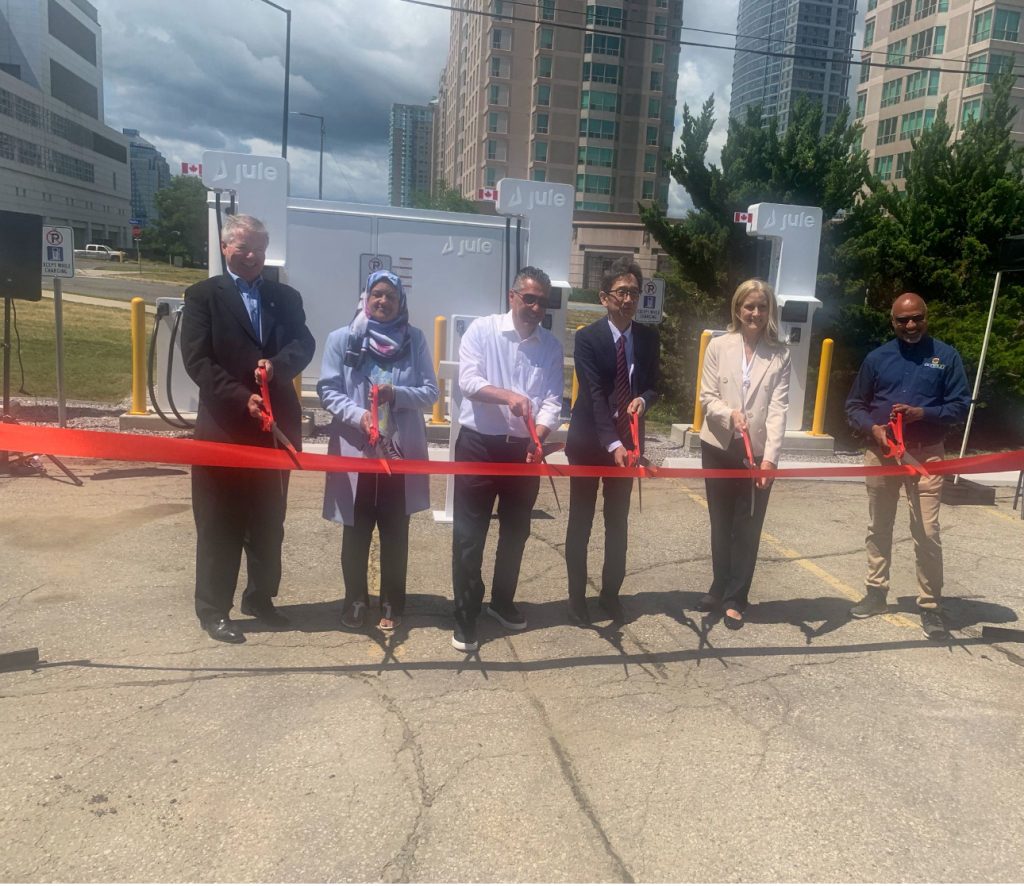
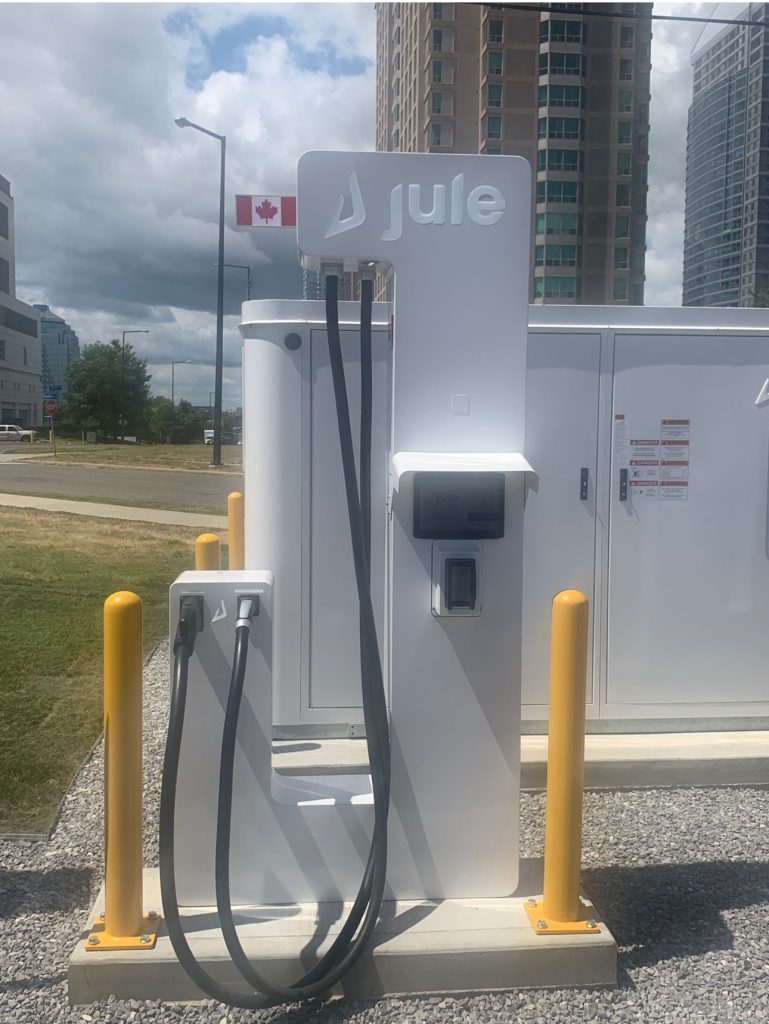
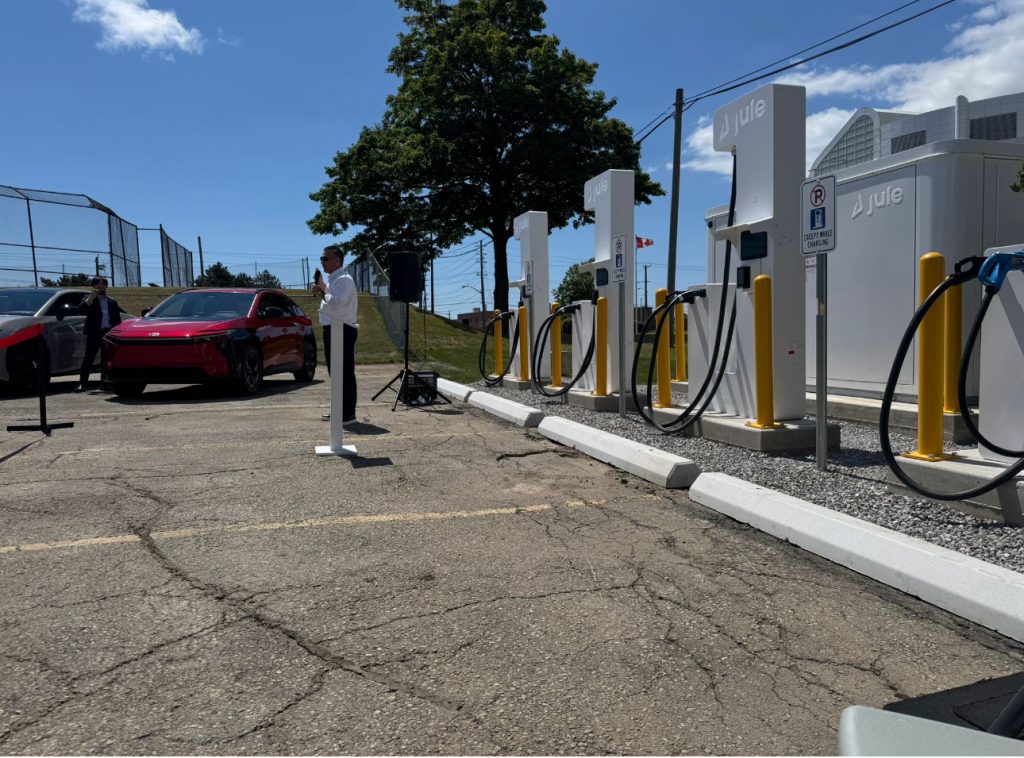
Here are my comments on the new EV charging stations which were unveiled at 1 Toyota Place today in Ward 24 Scarborough-Guildwood:
Good afternoon everyone,
It is a pleasure to be here today in Scarborough for the unveiling of Jule’s new EV Fast Charging System.
This is a proud moment for our community, and I want to thank Jule, Toyota Canada, and Mitsui Canada for their leadership and investment in clean technology right here in Scarborough,
and for helping to shape the future of transportation not just in Toronto, but across Canada and North America.
As many of you know, transportation is the second-largest source of greenhouse gas emissions in Toronto.
In 2022, passenger vehicles alone accounted for 23% of our city’s emissions.
That is why the City of Toronto has committed to achieving net zero emissions by 2040 through our TransformTO Net Zero Strategy.
One of our key targets is for 30% of all registered vehicles in Toronto to be electric by 2030.
But to get there, we need the right infrastructure and that is exactly what today’s event is about.
Public EV charging, especially fast charging, is essential for people who can’t charge at home.
It’s also vital for encouraging more people to make the switch to electric.
This new fast charging system is more than just a piece of technology, it is a symbol of progress.
It represents cleaner air, quieter streets, and a more sustainable future for our city.
Thank you again to Jule, Toyota, and Mitsui for your partnership and your commitment to innovation.
Your work in battery energy storage, EV charging, and EV vehicles is important to our city’s climate goals and economic growth.
And thank you to everyone here today for supporting a greener, healthier, and more connected Toronto.
Open Data Awards Showcase Tuesday, March 4, from 4-6pm ET The Metro Hall rotunda (55 John. St.). Approximately 60 attendees, including award winners, Councillor Paul Ainslie, City DCM David Jollimore, CTO Sonia Brar,
Good afternoon Everyone,
I’m truly delighted to be here today to talk about something I’m deeply passionate about: the City’s open data program.
We’re here to celebrate its history, its evolution into an award-winning initiative, and most importantly, the crucial role you, the public, play in transforming data into tangible value for our residents.
My involvement with open data at the City predates the program’s official launch in 2009. I’ve been a champion of this initiative from its very inception. I’ve had the privilege of witnessing firsthand the growth and evolution of our open data portal. It’s been a remarkable journey.
Let’s take a moment to reflect on some of the milestones.
In 2015, Toronto Open Data was ranked second in Public Sector Digest’s Open Cities Index, a testament to the hard work and dedication of the team.
More recently, in 2023, Toronto was named the third smartest city in the world by Juniper Research. And what was a key factor in this prestigious recognition? Our use of open data, particularly in identifying and resolving civic issues. This is a source of immense pride for our city.
As a Councillor, I’ve consistently advocated for greater access to City data. I’ve put forward numerous motions at Council and committee to ensure that more information is made available to the public. Because open data is far more than just about transparency. It’s about fostering innovation.
When we unlock government data, we unleash its potential for re-use and analysis by civic technologists, community advocates, researchers, entrepreneurs, and businesses.
This collaboration is what truly drives positive change and improves the lives of our residents.
However, open data’s true value lies in its utilization. It’s in the creation of new tools, services, and the resulting positive impacts.
That’s why I’m so thrilled that Technology Services and the Open Data team have launched the Toronto Open Data Awards. This initiative is a celebration of the remarkable tools, services, and impacts that users of open data are creating for their fellow citizens.
Whether it’s helping them navigate the TTC with ease or planning a safe and enjoyable swim in Lake Ontario, these projects are making a real difference.
On behalf of myself and my colleagues on City Council, I extend my heartfelt congratulations to the winners of the inaugural Toronto Open Data Awards. Your work, whether it’s a part of your daily job or a passion project, truly matters. You are the driving force behind the transformation of data into a better future for our city.